
Find answers to the questions we’re asked most often about boilers, plumbing, heating systems, bathroom installations and emergency repairs. If you can’t find the answer you’re looking for, simply get in touch and we’ll be happy to help.
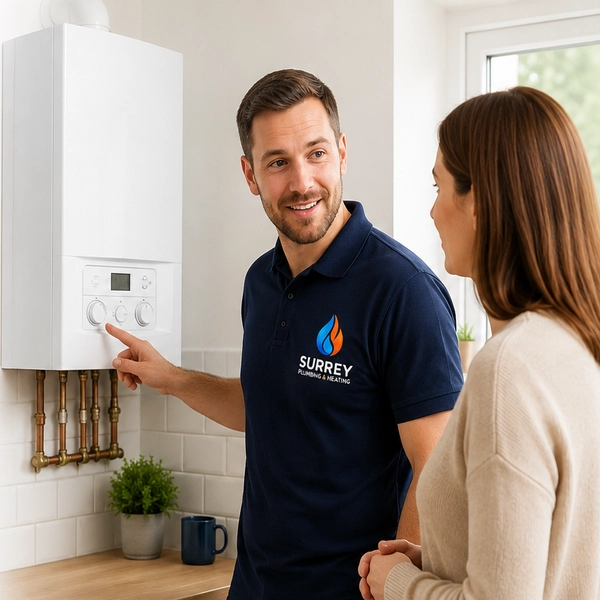
🔥 Boiler Help & Advice
How often should I service my boiler?
Most manufacturers recommend having your boiler serviced once a year to keep it operating safely and efficiently.
Regular servicing helps identify worn components before they fail, improves efficiency and ensures your boiler continues to meet Gas Safe safety standards. Annual servicing may also be required to maintain your manufacturer’s warranty.
If your boiler is making unusual noises, losing pressure or not heating your home properly, it should be checked sooner rather than waiting for its annual service.
Need to book your annual boiler service? Contact Surrey Plumbing & Heating today to arrange a convenient appointment.
My boiler has lost pressure. What should I do?
Most modern boilers operate best at a pressure of around 1.0 to 1.5 bar when the system is cold. If the pressure drops too low, your boiler may stop working properly or display a fault code.
A small loss of pressure over time can be normal, but frequent or sudden pressure loss may indicate a leak in the heating system, a faulty pressure relief valve or another issue that should be investigated.
You can often restore the pressure by carefully using the filling loop supplied with your boiler. If you’re unsure how to do this, it’s best to consult your boiler manufacturer’s instructions or contact a qualified Gas Safe engineer.
If your boiler repeatedly loses pressure after topping it up, avoid continually repressurising it, as this can mask an underlying fault and potentially cause further damage.
Need help with a boiler that’s losing pressure? Contact Surrey Plumbing & Heating today and we’ll diagnose the problem and get your heating system back up and running safely.
Should I repair or replace my boiler?
If your boiler has developed a fault, the best option depends on its age, condition and the cost of the repair. In many cases, replacing a small component is all that’s needed to restore reliable heating and hot water.
However, if your boiler is 10 to 15 years old, requires frequent repairs or has become inefficient, replacing it could save you money in the long term through lower energy bills and reduced maintenance costs.
Modern condensing boilers are far more energy efficient than older models and often provide improved heating performance and greater reliability.
We’re always happy to give honest advice. If a repair is the most sensible option, we’ll tell you. If a replacement would offer better long-term value, we’ll explain your options without any unnecessary pressure.
Not sure whether to repair or replace your boiler? Contact us for straightforward, professional advice.
How long does a new boiler installation take?
Most straightforward boiler replacements can be completed within a single day. If you’re replacing an existing combi boiler with a similar model in the same location, disruption is usually kept to a minimum.
More complex installations, such as changing from a conventional or system boiler to a combi boiler, relocating the boiler or upgrading pipework, may take two to three days depending on the work involved.
Before starting, we’ll explain exactly what the installation involves, provide a clear quotation and let you know how long the work is expected to take.
Our aim is always to complete every installation efficiently, leaving your home clean, tidy and with your heating and hot water fully operational.
Thinking about replacing your boiler? We’d be happy to discuss the best options for your home.
What size boiler do I need for my home?
Choosing the correct boiler size is important. A boiler that’s too small may struggle to meet demand, while one that’s too large could waste energy and increase running costs.
The right boiler depends on several factors, including:
- The size of your property.
- The number of bathrooms.
- How many people live in the home.
- Your typical hot water usage.
- The number of radiators and your heating requirements.
During a home survey, we’ll assess your property and recommend a boiler that provides reliable heating and hot water without paying for more capacity than you actually need.
We install quality boilers from leading manufacturers and will always recommend the most suitable solution for your budget and lifestyle.
Need help choosing the right boiler? We’re happy to provide expert guidance and a no-obligation quotation.
Why is my boiler making unusual noises?
Boilers can make different noises for a variety of reasons. Banging, whistling, gurgling or vibrating sounds may indicate trapped air, low water pressure, a build-up of limescale, circulation problems or worn internal components.
Some noises are relatively minor, while others can indicate a fault that should be investigated before it becomes more serious.
If your boiler suddenly becomes much louder than normal, starts displaying fault codes or isn’t heating your home properly, it’s best to have it checked by a Gas Safe registered engineer.
Ignoring unusual noises can sometimes lead to larger repairs and unnecessary breakdowns, particularly during the colder months when your heating system is working hardest.
If your boiler doesn’t sound right, we can quickly identify the cause and recommend the most cost-effective solution.
Can you install smart heating controls with my boiler?
Yes. Smart heating controls are compatible with many modern boilers and allow you to control your heating using a smartphone, tablet or voice assistant.
They can help improve comfort, reduce energy usage and allow you to heat your home more efficiently by setting schedules that suit your lifestyle.
If you’re having a new boiler installed, it’s often an ideal time to upgrade your heating controls. We can also install smart thermostats on many existing systems, subject to compatibility.
We’ll explain the available options and recommend a solution that’s easy to use and offers genuine benefits rather than unnecessary features.
Interested in smarter heating? Ask us about the latest heating controls for your home.
What should I do if my boiler stops working completely?
If your boiler stops working, first check whether there’s power to the appliance, that your thermostat is set correctly and that the system pressure is within the recommended range. Some boilers can also be safely reset by following the manufacturer’s instructions.
If these simple checks don’t restore normal operation, avoid repeatedly pressing the reset button, as this can sometimes make diagnosing the fault more difficult.
A complete boiler breakdown could be caused by anything from a faulty component to ignition problems, frozen condensate pipes or electrical issues.
Our experienced Gas Safe engineers can diagnose the problem quickly and explain the repair options clearly before any work is carried out.
No heating or hot water? Contact Surrey Plumbing & Heating and we’ll do our best to get your system back up and running as quickly as possible.
🔧 General Plumbing Advice
Why is my tap dripping?
A dripping tap may seem like a minor inconvenience, but over time it can waste thousands of litres of water and increase your water bills. In many cases, the cause is simply a worn washer, cartridge or valve that can be replaced quickly and economically.
Ignoring a dripping tap can sometimes lead to further wear and even damage to the tap itself, making a simple repair more expensive than it needs to be.
Whether it’s a kitchen mixer tap, bathroom basin tap or outside tap, we can diagnose the problem and recommend the most cost-effective solution.
If your tap won’t stop dripping, we’ll be happy to repair or replace it and help prevent further water waste.
How do I know if I have a hidden water leak?
Not all plumbing leaks are immediately obvious. Hidden leaks can occur beneath floors, behind walls or under kitchen units, often causing damage long before they become visible.
Common signs include:
- Unexpectedly high water bills.
- Damp patches or mould growth.
- Low water pressure.
- A constantly running water meter when no taps are in use.
- Musty smells.
The sooner a hidden leak is identified, the less chance there is of significant water damage to your property.
If you suspect you have a hidden leak, contact us for professional advice and prompt investigation.
Why is my toilet constantly running?
A toilet that continues running after flushing is usually caused by a faulty fill valve, flush valve or worn seal inside the cistern. Although it may not seem urgent, a constantly running toilet can waste a surprising amount of water every day.
Fortunately, most toilet faults can be repaired without replacing the entire suite. We’ll inspect the cistern, identify the cause and replace only the components that need attention.
If your toilet is also difficult to flush or takes a long time to refill, it’s worth having it checked before the problem worsens.
We’ll quickly restore your toilet to full working order and help reduce unnecessary water usage.
What should I do if my sink is blocked?
Slow-draining sinks are usually caused by a build-up of grease, food waste, soap residue or hair inside the waste pipe.
You can sometimes improve drainage by carefully removing debris from the plughole or using hot water and a suitable drain cleaner. However, avoid using excessive force or harsh chemicals, as these can sometimes damage pipework or push the blockage further into the system.
If the blockage keeps returning or the sink has stopped draining completely, professional equipment may be needed to clear it safely.
We can quickly diagnose stubborn sink blockages and restore normal drainage with minimal disruption.
Can frozen pipes burst?
Yes. When water freezes, it expands. This expansion places enormous pressure on the pipework and can eventually cause pipes to crack or burst.
Frozen pipes are most common during prolonged periods of very cold weather, particularly in lofts, garages and outside pipework that isn’t properly insulated.
If you suspect a pipe has frozen, turn off the water supply if possible and avoid using naked flames to thaw it. Gentle warmth from towels soaked in warm water or a fan heater positioned safely nearby is usually the safest approach.
If a frozen pipe has burst or you’re concerned about potential damage, we’re here to help.
.
Why is my water pressure low?
Low water pressure can make everyday tasks like showering, washing up and filling baths frustratingly slow.
Possible causes include:
- Partially closed stop valves.
- Blocked taps or shower heads.
- Pipework restrictions.
- Faulty pressure-reducing valves.
- Leaks within the plumbing system.
- Issues with the incoming mains supply.
We’ll investigate the cause of the problem and recommend the most appropriate solution, whether that’s a simple repair, pipework improvement or advice regarding your water supplier.
If you’re struggling with poor water pressure, we can help restore a stronger, more reliable water supply.
How can I prevent blocked drains?
Many blocked drains are avoidable with a few simple habits.
Avoid pouring fats, oils and grease down kitchen sinks, as they harden inside pipework over time. Food scraps, coffee grounds and wet wipes should also be disposed of in the bin rather than washed away.
In bathrooms, using hair catchers in showers and regularly cleaning plugholes can help prevent blockages from developing.
Regular maintenance is far easier and less expensive than dealing with a completely blocked drain.
If your drains are draining slowly or blocking repeatedly, we can identify the underlying cause and recommend the best long-term solution.
Do you repair leaking pipework?
Yes. We repair all types of leaking pipework, from small domestic leaks beneath sinks to damaged central heating pipework and hidden leaks within walls or floors.
Even a small leak can cause significant damage over time, including damp, mould, damaged flooring and increased water bills. That’s why it’s always best to deal with leaks as soon as they’re discovered.
Our engineers will locate the source of the leak, explain the available repair options and complete the work using quality materials designed to provide a reliable, long-lasting repair.
Whether you’ve noticed a small drip or a major water leak, we’re ready to help protect your home and restore your plumbing quickly and professionally.
🚿 Bathrooms & Installations
How long does a bathroom installation take?
Every bathroom is different, but most complete bathroom installations take between one and two weeks, depending on the size of the room and the amount of work involved.
A straightforward replacement of an existing bathroom suite may be completed more quickly, while larger projects involving new pipework, tiling, electrical work or structural alterations will naturally take longer.
Before work begins, we’ll provide a clear schedule so you know what to expect and keep you informed throughout the project. Our aim is always to minimise disruption while delivering a bathroom you’ll enjoy for many years.
Planning a new bathroom? We’d be delighted to discuss your ideas and provide a free, no-obligation quotation.
Can you replace just my shower?
Yes. If the rest of your bathroom is in good condition, we can replace just your shower without the expense of a complete bathroom renovation.
Whether you need a new electric shower, thermostatic mixer shower, shower valve, shower tray, enclosure or shower screen, we’ll recommend the best replacement to suit your existing plumbing and budget.
We can also repair or replace faulty shower pumps, leaking shower valves and worn seals where a full replacement isn’t necessary. Before any work begins, we’ll explain your options and provide a clear, fixed quotation with no hidden surprises.
Should I choose a walk-in shower or a bath?
The right choice depends on your home, your lifestyle and your future needs.
Walk-in showers are increasingly popular because they’re stylish, practical and easy to access, making them ideal for busy households or anyone planning ahead for improved accessibility.
A bath, however, remains a popular choice for families with young children and can still be an attractive feature for many buyers if you plan to sell your property in the future.
We’ll discuss your requirements and help you create a bathroom that’s both practical and visually appealing.
Not sure which option is right for you? We’re always happy to offer honest advice based on your individual needs.
Do I need new pipework for a bathroom renovation?
Not always. If your existing plumbing is in good condition and the new fixtures are remaining in similar positions, the existing pipework can often be reused.
However, if you’re changing the bathroom layout, upgrading older plumbing or installing modern fixtures, some new pipework may be required to ensure reliable performance and compliance with current standards.
We’ll assess your existing plumbing during our survey and explain exactly what work is recommended before installation begins.
Every bathroom is different, and we’ll always recommend the most practical and cost-effective approach.
Can you install underfloor heating?
Yes. Underfloor heating is becoming increasingly popular in modern bathrooms because it provides gentle, even warmth while freeing up valuable wall space.
It works particularly well beneath tiled floors and can make your bathroom feel warmer and more comfortable during the colder months.
There are both electric and water-based systems available, and the most suitable option depends on your property and the type of renovation being carried out.
We’ll explain the advantages of each system and recommend the best solution for your home and budget.
Thinking about adding underfloor heating? We’d be happy to discuss the options available.
Can you install bathroom extractor fans?
Yes. A good extractor fan is one of the most important features of any bathroom, helping to remove excess moisture and reduce condensation.
Without adequate ventilation, damp conditions can encourage mould growth, peeling paint and damage to walls and ceilings over time.
We can install new extractor fans, replace older units or advise on the most suitable ventilation system for your bathroom, ensuring it meets current Building Regulations where required.
Proper ventilation helps protect both your bathroom and your home for years to come.
How much disruption should I expect?
Bathroom renovations naturally involve a degree of disruption, but we work hard to keep inconvenience to a minimum.
We’ll protect surrounding areas, keep the work area as tidy as possible and remove waste materials regularly throughout the project.
Before work begins, we’ll explain the installation process, expected timescales and any periods when water supplies may need to be temporarily isolated.
Good communication is an important part of every project, and we’ll always keep you informed of progress from start to finish.
Our goal is to make your bathroom renovation as smooth and stress-free as possible.
Do you remove the old bathroom?
Yes. As part of a complete bathroom installation, we’ll carefully remove your existing bathroom suite before beginning the new installation.
This includes removing old sanitaryware, pipework where necessary and preparing the room for its transformation.
All waste materials are removed responsibly, leaving your property clean and ready for the next stage of the project.
We’ll also check the condition of the underlying plumbing and structure before installing your new bathroom, ensuring any issues are dealt with before they’re hidden behind new fittings and finishes.
From removal to final installation, we’ll manage the entire project with care and attention to detail.
🚨 Emergency Plumbing & General Advice
What counts as a plumbing emergency?
A plumbing emergency is any situation that could cause significant damage to your property, leave you without essential services or present a potential safety risk.
Examples include burst pipes, major water leaks, overflowing toilets, no hot water, complete heating failure during cold weather, or a boiler fault that may affect your family’s comfort or safety.
The sooner an emergency is dealt with, the less chance there is of costly damage to your home.
If you’re unsure whether your problem is an emergency, give us a call. We’ll be happy to advise you on the best course of action.
What should I do if a pipe bursts?
The first priority is to minimise water damage.
If it’s safe to do so:
- Turn off your mains water supply.
- Switch off your boiler and central heating if affected.
- Turn off electrical power if water is near electrical fittings.
- Open nearby taps to help drain the remaining water from the system.
- Move furniture and valuables away from the affected area if possible.
Avoid attempting temporary repairs unless you’re confident it’s safe.
Burst pipes can cause extensive damage very quickly, so acting promptly can significantly reduce repair costs.
Our experienced plumbers can quickly isolate the problem, repair the damaged pipework and help prevent further damage to your property.
I've got no hot water. What should I check?
Before calling an engineer, it’s worth carrying out a few simple checks.
Make sure:
- Your boiler has power.
- The thermostat is set correctly.
- The boiler pressure is within the recommended range.
- No fault code is displayed on the boiler.
- Your gas and electricity supplies are working normally.
If everything appears normal but you’re still without hot water, the problem may be caused by a faulty component, thermostat or control system.
If you’re unable to restore your hot water, we’ll diagnose the fault quickly and explain the available repair options clearly.
My radiator isn't heating up. What should I do?
If one radiator remains cold while others are working normally, the most common causes include trapped air, sludge build-up, a faulty thermostatic radiator valve or an imbalance within the heating system.
Bleeding the radiator may solve the problem if air is trapped inside. However, if the radiator is cold at the bottom, it may require flushing to remove accumulated sludge.
Persistent heating problems should be investigated to prevent unnecessary strain on your boiler and to improve overall heating efficiency.
We’ll identify the cause of the problem and restore your heating system to full performance.
Do you offer same-day plumbing repairs?
Where possible, yes.
We understand that many plumbing problems simply can’t wait. We always aim to respond promptly to urgent enquiries and will arrange the earliest available appointment for emergency or time-sensitive repairs.
Our engineers carry a wide range of commonly used parts, allowing many repairs to be completed during the initial visit.
If specialist parts are required, we’ll explain the timescales and keep you fully informed throughout the repair process.
If you need a plumber today, contact us and we’ll do everything we can to help.
Can you help if my boiler breaks down in winter?
Absolutely.
A boiler breakdown during the colder months can be particularly stressful, especially if your home has no heating or hot water.
We’ll always do our best to prioritise urgent heating breakdowns and restore your system as quickly as possible.
Our engineers are experienced in diagnosing a wide variety of boiler faults and will explain the problem, the recommended repair and the likely costs before work begins.
If a replacement boiler proves to be the most practical solution, we’ll discuss all available options and provide a clear quotation.
Don’t struggle through the cold—contact us as soon as you notice a problem.
Why do I need a Gas Safe registered engineer?
Any work involving gas appliances must be carried out safely and in accordance with current regulations.
Gas Safe registered engineers are fully qualified to install, service and repair gas boilers, cookers, fires and other gas appliances. Using an unregistered person could place your home and family at risk and may also invalidate warranties or insurance policies.
Always ask to see a Gas Safe ID card before allowing anyone to carry out gas work in your property.
Your safety is our highest priority, and all gas work is completed by fully qualified Gas Safe registered engineers.
Which areas do you cover?
We provide professional plumbing, heating and gas services throughout Sutton, Cheam, Banstead, Epsom and many surrounding towns and villages across Surrey and South West London.
If you’re unsure whether you’re within our normal service area, simply give us a call. We’ll always do our best to help and, if necessary, advise whether your location falls within our coverage.
Whether you require an emergency plumber, annual boiler service, central heating repair or complete bathroom installation, you can expect the same friendly service, honest advice and high-quality workmanship.
Need a reliable local plumber? Contact Surrey Plumbing & Heating today to discuss your requirements or request a free quotation.